
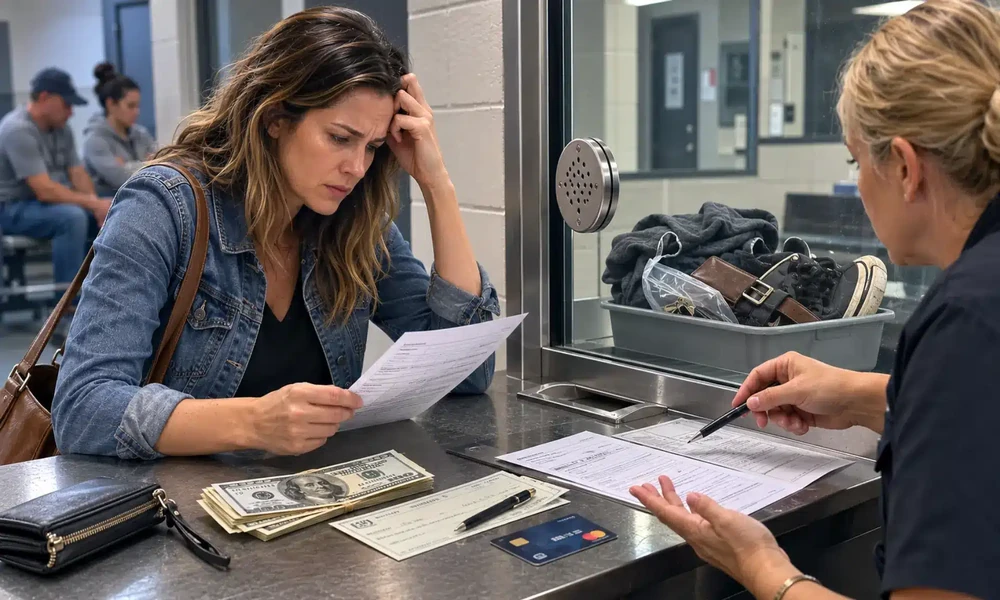
Drive through Cincinnati and the bail bond billboards are hard to miss. Cross the bridge into Newport and they disappear. That is no accident. Kentucky abolished commercial bail bonding for profit back in 1976, which means a family scrambling to get someone out of the Campbell County Detention Center will not find a bondsman to call. What they find instead is a system built around a pretrial interview, a risk score and a judge, all moving on a clock that starts the moment booking ends.
That clock is familiar territory at Levinson Law LLC, where one of the first moves on a new in-custody case is a visit to the detention center itself. Aaron Levinson, who founded the Newport firm after years as a prosecutor in Kenton County and St. Louis, built his practice around criminal defense in Campbell County and the neighboring Northern Kentucky courts, with licenses in both Kentucky and Ohio. Having once made charging decisions and bond recommendations from the other side of the courtroom, he knows how much the first hours of a case can shape the weeks that follow.
The Night Begins at Booking
After an arrest, a person is taken to jail, photographed, fingerprinted and entered into the system. Property is logged and charges are recorded. For most people this is the most disorienting stretch, because nothing about it feels like a legal proceeding even though it sets one in motion.
Family members often call the jail right away hoping to post money. In many cases there is nothing to post yet, because no bond has been set. That decision usually waits for the next step.
An Interview That Has Nothing to Do With Guilt
Kentucky runs a statewide agency called Pretrial Services, which operates in all 120 counties around the clock. Under a court rule, pretrial specialists interview and assess people arrested on bailable offenses within 24 hours of arrest, and the release options that follow are laid out in the pretrial statutes of Chapter 431 of the Kentucky Revised Statutes, published by the Kentucky General Assembly.
The interview covers practical matters. Officers ask about home address, how long the person has lived in the area, employment, family ties, prior record and any history of missed court dates. They verify answers through records and references. The information feeds a risk assessment that estimates two things, the likelihood of showing up to court and the likelihood of a new arrest while the case is pending.
This conversation is about release, not about what happened. Anything said about the facts of the charge can travel further than the interviewer’s notes, so the safer course is to answer the background questions and leave the incident itself for a lawyer. One detail catches people off guard. Declining the interview altogether usually removes the chance of the fastest release option.
Release Before Anyone Sees a Judge
For certain lower-level, nonviolent charges, Kentucky’s Administrative Release Program lets pretrial officers release eligible people on their own recognizance without contacting a judge at all. A person scored as low risk on a qualifying charge may walk out the same day with nothing more than a promise to appear and a court date.
Charges outside that program, including violent offenses and many felonies, go before a judge for a bond decision. Kentucky law generally steers judges toward non-financial release for people assessed as low or moderate risk, though the court keeps discretion to set money bail or conditions when the facts justify it.
The Shapes a Bond Can Take
When a judge does set bond, it can come in several forms, and the differences matter a great deal to the family trying to pay it.
- Own recognizance. Release on a signed promise to appear, with no money involved.
- Unsecured bond. A dollar amount is set but nothing is paid up front. The money is owed only if the person fails to appear.
- Full cash bond. The entire amount must be deposited with the court clerk before release.
- Partial cash deposit. A percentage, often ten percent, is posted with the court instead of the full figure.
- Property bond. Real estate equity is pledged as security, which requires documents and can take longer to arrange.
Kentucky also allows a credit against bail for time spent in custody on many charges, at $100 per day under KRS 431.066. For someone held on a modest bond who cannot pay it, those days slowly chip away at the amount owed. Money posted directly with the court is generally returned at the end of the case once fees, fines or costs are deducted, which is very different from the nonrefundable premium a commercial bondsman would keep in other states.
Strings Attached to Freedom
Release rarely comes without conditions. Common ones include staying away from an alleged victim, avoiding certain addresses, submitting to drug or alcohol testing, reporting to a pretrial officer and remaining in Kentucky unless the court permits travel. Some people are placed on monitored conditional release, which can involve regular check-ins or electronic monitoring.
For Northern Kentucky residents who work across the river, a travel restriction can create an immediate problem. Raising it at the bond hearing, or filing a motion soon after, is far easier than explaining a violation later.
Violations carry real weight. A missed test or prohibited contact can lead to bond revocation and a return to jail. Skipping a court date can bring a bench warrant and, in some circumstances, a separate charge for bail jumping.
Holds That Money Cannot Lift
Some people remain in custody even after bond is posted. A warrant from another county or state, a probation violation, or an immigration detainer from federal authorities can keep someone in the jail regardless of what happens on the local charge. In detainer cases especially, the way the criminal case resolves can affect immigration status down the road, so the two matters need to be looked at together rather than one after the other.
The Next Court Dates Arrive Quickly
Release is the beginning of the case, not its end. Misdemeanors proceed in district court, starting with arraignment. Felony charges also begin in district court, where a preliminary hearing tests whether probable cause exists. Under Kentucky’s criminal rules, that hearing is generally due within ten days for a person in custody and twenty days for someone released. If the case moves forward, a grand jury considers an indictment, and the matter shifts to circuit court.
Each of these stages offers a chance to revisit bond conditions, challenge evidence or negotiate. Missing any of them undoes much of what was gained in that first day.
A System Built on Showing Up
Kentucky’s approach rests on a simple bet. Rather than relying on a bondsman’s financial stake to bring people back to court, it relies on information, supervision and the person’s own commitment. For families on the outside, that means the most useful things to gather are not cash but facts, such as a stable address, an employer willing to confirm a job and the names of people who can vouch for someone’s ties to the community. Those details often decide whether a loved one sleeps at home or spends another night waiting for the next hearing.